Maybe, the Meaning of Life.

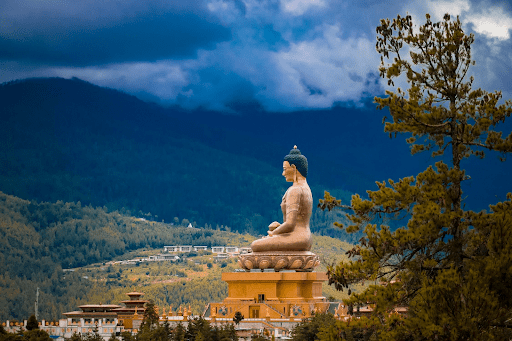
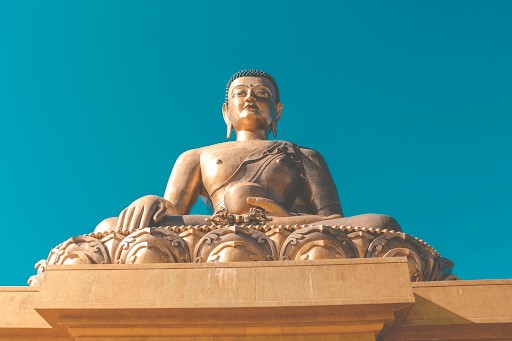
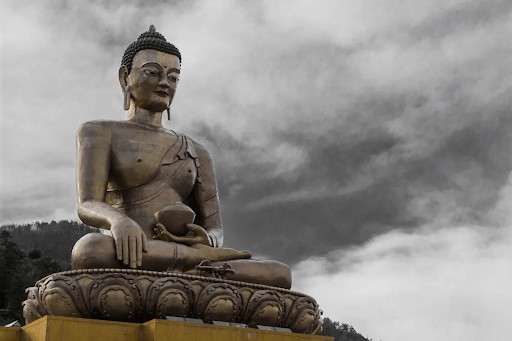
Master – On 10 July 2024, Bhutan commemorated the first sermon taught by Lord Buddha, a universe-shattering event that occurred shortly after Prince Siddhartha awoke to the truth under the bodhi tree, resulting in him becoming the Buddha – the awakened one. 

After his awakening, the Buddha remained in the area for a further seven weeks before walking to Sarnath. Once there, he met with the five ascetics with whom he previously practiced meditation, and expounded a sermon expressing the essence of his realizations. 

This event marked the first turning of the wheel of the Dharma, and the teaching became known as the Four Noble Truths. 

The Noble Truth of Suffering

The Noble Truth of the Causes of Suffering

The Noble Truth of the Cessation of Suffering

The Noble Truth of the Path to the Cessation of Suffering

Before delving into the meaning of the Truths, we need to clarify the terms used. Although ‘suffering’ is the most common translation of the Pali word ‘dukkha’, it is not a precise interpretation. While pain and suffering are included in the broader meaning of dukkha, more specifically the term implies a sense of discontentment, discomfort, and overall lack of contentment.  

When people hear that life is characterized by suffering or even just discomfort, they generally think, ‘Well, yes, there are times when I suffer or feel uncomfortable, such as when I have a headache or meet some kind of misfortune, but generally I’m ok.” In the context of these Truths, this statement needs further analysis. 
Embrace Life

First of all, there is the suffering that all living beings encounter – the pain associated with sickness, birth, and death. 

Moreover, there is the suffering of change. Everything in the universe is a compounded phenomenon, which means that it is just the temporary joining together of components, and when one or more of these shifts, the object falls apart. 

A leg removed, and a table ceases to exist, friends depart and a party ends, a partner dies or their love falters and a relationship disintegrates. Nothing lasts forever. Wealth, property, marriages, empires, and even universes are created in the same way, and, similarly, will eventually fall apart. 

As change is an inevitable part of sentient life, anxiety and fear are never far from the surface. We are enjoying time with our loved-ones, but an underlying sadness that the gathering will soon end taints the pleasure. We have a happy family, but fears of illness and misfortunes disturb our sleep. 

In addition, there is a pervasive suffering that is associated with perceiving the world in a specific way and then becoming attached to that view, thinking it to be real. 

To most of us, four legs and a top is a table, but is it ultimately so? To an indigenous person in the Amazon jungle, it might be considered a boat. A goat might perceive it as a platform on which to stand, while a young child will likely see it as a hiding place. 

Put in another way, nothing, including our own bodies, exists beyond the labels that we attach to a jumble of components that temporarily join together. 

Now, as nothing truly exists in the way we see it, our world is merely a fabrication, or, put in another way, everything we perceive is nothing more than an illusion or a dream. 

Like a rainbow or mirage, things can be seen, but under analysis they are just the temporary joining together or components. Then, based on our specific view, we attach a label to this phenomenon, which we believe to be an ultimate designation.          

If it is unclear how this view creates suffering, then think of the mirage. We are in a desert, where conditions combine to create an illusion of an oasis. It appears real and so we endeavor to reach it in the belief that the water it holds can relieve our thirst. 

However, it doesn’t exist outside of our minds, but instead of investigating the oasis, we believe that the next mirage will contain the water we seek, and so our lives are characterized by dissatisfaction and frustration. 

Similarly, failing to recognize that everything exists like a mirage, we invest much time and energy seeking material goods, only to feel disappointed when they do not bring the lasting pleasure we had expected. 

Still, as with the oasis, our disappointment rarely causes us to question why these things are unfulfilling. Instead, we convince ourselves that our sense of dissatisfaction is due to insufficient money, property, or pleasure, and so we accelerate our efforts to accumulate more. 

Enhance your Perception
Accept Moments

If material things are merely an illusion, then does Buddhism recommend that we stop buying or producing goods? No, that is unnecessary – but we do need to maintain the right view. We need to understand that in the same way that an illusory oasis can never provide the means to quench our thirst, so the empty nature of material wealth prevents it from providing lasting joy and contentment. 

In short, once we understand that an oasis is just an illusion, we can enjoy the play of light and heat, but we do so without expectations of finding water. In this way, we do not suffer the pain of disappointment.

This point brings us to the second noble truth – to know the causes of suffering. After we begin to understand how the universe functions, we contemplate the causes of suffering. Due to the mistaken view of seeing ourselves and our environment as permanent and substantial, we respond to situations in an inappropriate way, which, in turn, plants the seeds for present and future suffering. 

Through contemplation, however, we realize that the objects that cause craving and rejection are actually no more real and permanent than figures in a movie or water in a mirage. As a result, we loosen our attachments to the material world, and, by default, remove the causes of our negative action. This connects to the third noble truth – the Cessation of Suffering.

Through understanding how our mistaken view of the world causes us to indulge in inappropriate thoughts, words and deeds, we examine the triggers of our responses. Through observing our life, we recognize that thoughts, words, or deeds that perpetuate the wrong view are the source of suffering. 

Now, it may not be difficult to intellectually grasp how a wrong view creates suffering. However, it is neither easy to correct the view, nor to abandon the inappropriate responses to which we have become habituated. 

So, we need a path. This is the final Noble Truth – The Noble Truth of the Path to the Cessation of Suffering. In this Truth, the Buddha teaches numerous means that lead us to awaken to reality. Using the earlier example, he devised methods that encourage us to examine the oasis and recognize that this lush, water-holding phenomenon exists only in our minds.

Relax and Loosen Your Mind and Emotions
Practice makes Perfect

In respect to these four truths, the Buddha is often referred to as a physician. The first truth is the diagnosis, the second is an explanation of the causes of the disease, the third prescribes a remedy, while the final truth offers a comprehensive programme for restoring the patient’s health. 

Now, if you can infuse the meritorious deeds that we generally undertake on Drukpa Tshezhi and other auspicious days with the wisdom of these Truths, you will have commemorated the event in the most appropriate way possible – by stepping on the path to liberation as prescribed by the Buddha in Sarnath over 2,500 years ago. 

Related Perspective

Scroll to Top