Stop Recording. Start Living
Student – Lama la, you recently wrote an article pointing out the negative effects of the current trend of constantly taking selfies. I fully agreed with Lam’s points. But, what about TikTok? I feel this platform is also overused and can cause stress and be detrimental to mental health. I would be grateful for Lama’s thoughts and suggestions on the matter.
Master – Like television, the internet, and AI, TikTok can be a force for good or bad. It entirely depends on how it is used.
On the positive side, it gives undiscovered talent a chance to showcase their abilities and build a fan base — opportunities that are often denied by traditional local channels, which may reject performers simply because they have tattoos, dyed hair, or perform rap, regardless of their talent. It can also serve as a powerful vehicle for delivering public health messages, especially to young people.
Yet, as you noted, it can create stress and cause mental health to deteriorate. Why does such a simple platform produce this effect? It is because people identify too closely with the image they project, treating it as a reflection of their true self rather than a playful performance.
When self-worth becomes tied to likes, views, and comments, every piece of feedback carries disproportionate weight. A single negative remark can feel devastating and trigger self-doubt. It is as if a person has built a fragile glass bubble — beautiful to look at, but brittle and vulnerable. One arrow of judgment is enough to shatter it, revealing a deeper fear that such feedback threatens something essential and permanent about their identity.
In truth, this anxiety is caused by a fundamental misunderstanding of who we are. There is no fixed, unchanging self to protect — no stable core that must be defended against every criticism or curated for every audience.

We are in constant flux — our appearance, emotions, and circumstances shifting not just day to day, but moment to moment. We are not marble statues carved by Michelangelo, frozen in some ideal, flawless form. I ask, is the face of someone waking up dark-eyed after a night of drinking the same as the one later — washed, rested, and buzzing with anticipation for the evening ahead?
Yet, we present an image as if it were permanent, and then become trapped by it. We feel compelled to maintain and defend that image, and that becomes a source of constant stress.
In truth, true beauty lies not in a polished projection, but in being authentic and projecting our true nature, which is kindness and humility. These cannot be packaged for TikTok, but they shine far brighter than any carefully curated image, and they are free of the burden of hope and fear that come with performance.
Furthermore, as TikTok’s business model depends on engagement, the platform is deliberately engineered to be addictive. As a result, even casual gatherings with friends — a laugh over coffee, a spontaneous song — are transformed into performances for a world audience. What was once private joy becomes a public spectacle, open to judgment.
This shift alters social dynamics. With phones appearing as soon as someone jokes or sings, we no longer fully inhabit the experience. As a result, many now hold back from joking or being playful in groups, fearing that private moments will be recorded and preserved online indefinitely. The habit of recording everything hollows out the very vibrancy it claims to preserve.
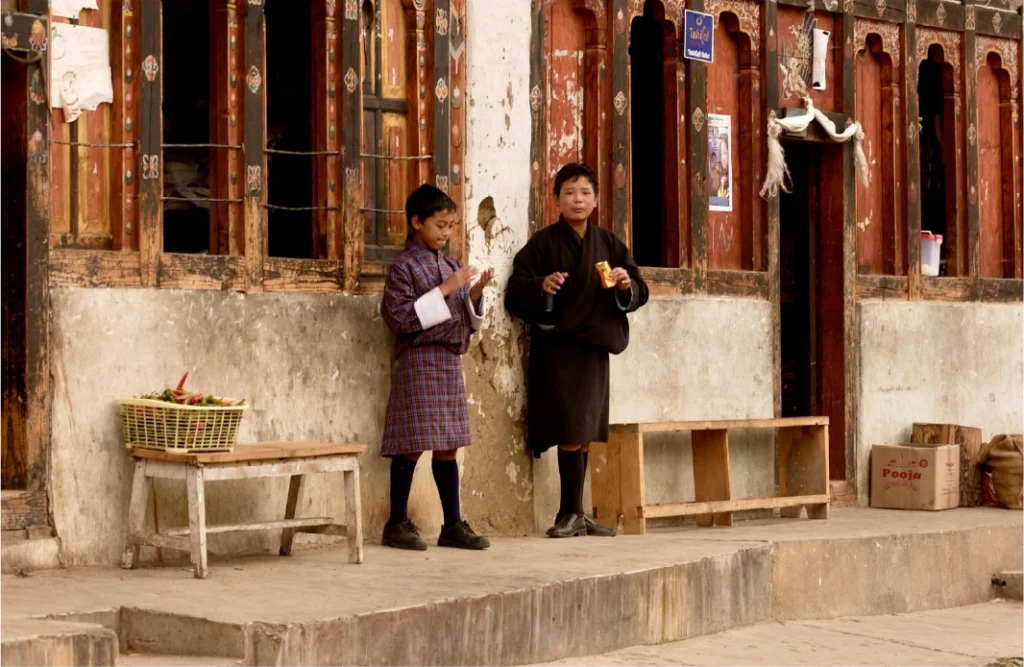
What is my personal opinion? I believe the real treasure lies in allowing moments with friends to be enjoyed fully and then letting them go. Trying to preserve every instant is like trading the beauty of autumn leaves or the splendour of spring blossoms for plastic replicas. It is their fleeting nature that makes them magical.
A family photograph at Losar, a baby’s first taste of ice cream, or a friend receiving a graduation certificate — these are the kinds of moments we might wish to share, at least with a limited audience. Yet when everything is broadcast to the entire world, a special moment becomes ordinary; a diamond is reduced to a pebble. This may explain why so much content on TikTok is at best mediocre and at worst dire.
By the same token, I feel that when a friend is talking or singing, we should simply enjoy the moment. If there is a genuine desire to share it with a few selected people, we can first ask the performer’s permission and then send it privately via apps such as WhatsApp or, better yet, Signal.
Think of the spirit of the Japanese Tea Ceremony. Every act, from boiling the water to preparing the tea, and then savouring the beverage with friends is special. Then it is over.
Like with the autumn leaves and spring blossoms, impermanence enhances the quality of the experience. Contrarily, in modern times, rather than enjoying the moments as they unfold, attendees are already thinking about how to upload the scenes or asking friends to hold poses for an audience.

So, next time you instinctively pull out your phone to record an event, pause and ask yourself why you cannot just relax and enjoy the moment. Consider whether you have perhaps been brainwashed by TikTok marketing to film and upload everything. True joy lies not in capturing every instant, but in fully living it — and then letting it go.
If, however, you are filmed without permission, try not to dwell on it. Even if you feel you made a fool of yourself, that moment does not define you. In reality, there is something both humbling and liberating in recognising that we are not the centre of other people’s worlds, and that attention moves on far sooner than our anxiety does. So, dance, joke, or sing boldly, totally indifferent to whether someone will upload it or not. That, in itself, is a taste of freedom.