

Between Disaster and Devotion.
Student – Hi Lama la, the recent tragedy in Nepal has deeply shocked and saddened me. As a Buddhist, I struggle to understand how to make sense of such terrible suffering. Do we simply accept it as part of samsaric life, or is there another way to respond? I feel lost and would be grateful for your guidance on how to contemplate such anguish as well as on what we can do to help prevent similar disasters in the future.
Master – We are not lumps of rock, and so we naturally feel the pain of those affected by such tragedies. The great Dzogchen master Nyoshul Khen Rinpoche gave an example: if we see a child struck by a bus, we rush to help without considering whether the child is known to us or comes from a good family. Such spontaneous compassion is uncontrived, uncalculating, and immediate, and arises as a natural activity of our innate Buddha-nature.
We also recognize that sickness and death are part of samsaric existence. We do our best to stay healthy through diet, exercise, and medical care, yet no matter how well we live, we will eventually fall sick and die. The point is to attend to what is before us without losing sight of the larger truth.
We can think about natural disasters similarly. We seek to prevent them and mitigate their impact, while recognizing that they cannot be eliminated entirely and that global warming will make typhoons, flash floods, and glacial collapses more frequent and severe. If we are serious about reducing such tragedies, we must confront global warming directly and urgently.
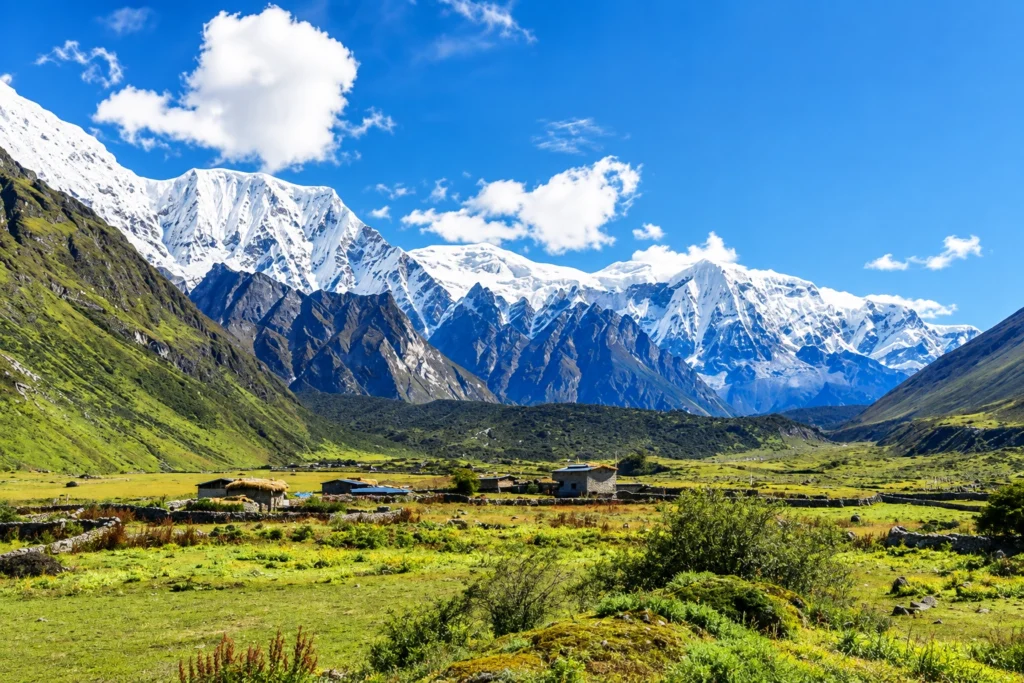
The recent devastation in Nepal illustrates the danger: warming temperatures destabilized glaciers, triggering catastrophic flooding. But the threat extends beyond sudden disasters. As regions become uninhabitable due to extreme heat, droughts, and coastal flooding, refugee crises will arise, food systems will falter, and competition for resources will intensify. Left unchecked, these pressures will fuel social instability, conflict, and even war.
Confronting these risks requires action on several fronts. In the Himalayas, we need early-warning systems for glacial and slope collapse, debris flows, and glacial-lake outbursts — not just monitoring rises in lake levels. Across other regions, coastal cities need to prepare for rising sea levels and inland cities for extreme heat. Most importantly, nations and industries must accelerate the shift from fossil fuels to renewable energy.
Am I optimistic that this will happen quickly enough? Honestly, no. Human beings have a remarkable capacity for innovation and cooperation, but we also have an extraordinary talent for denial, greed, and short-term thinking.
The world’s major powers possess the technology needed to cut emissions, but vested interests prevent them from mustering the political and economic will to deploy it — either at the necessary scale or, in some cases, at all. I fear that meaningful change will only come when existing power and economic structures face imminent collapse — by which point we may already have crossed climate thresholds that are difficult, if not impossible, to reverse.
Still, doing nothing is not an option. Alongside the outer work of preparing for disasters and pressurizing governments to cut carbon emissions, there is also an inner practice worth cultivating: prayer in a Buddhist context.
Some might contend that prayer is unscientific, but science remains a work in progress, far from providing a complete understanding of the universe. Its methods are also limited, unable to fully capture the depth and scope of Buddhist thought and practice or measure prayer’s effectiveness. Science deserves credit for transforming our material circumstances and advancing medicine, but we should recognize its limits and not treat it as a standard of what is true or beneficial.
How does prayer work? Nothing happens on its own; everything depends on many things coming together. A fruit needs soil, rain, and sunlight. Our lives work the same way, held together by countless causes and conditions.
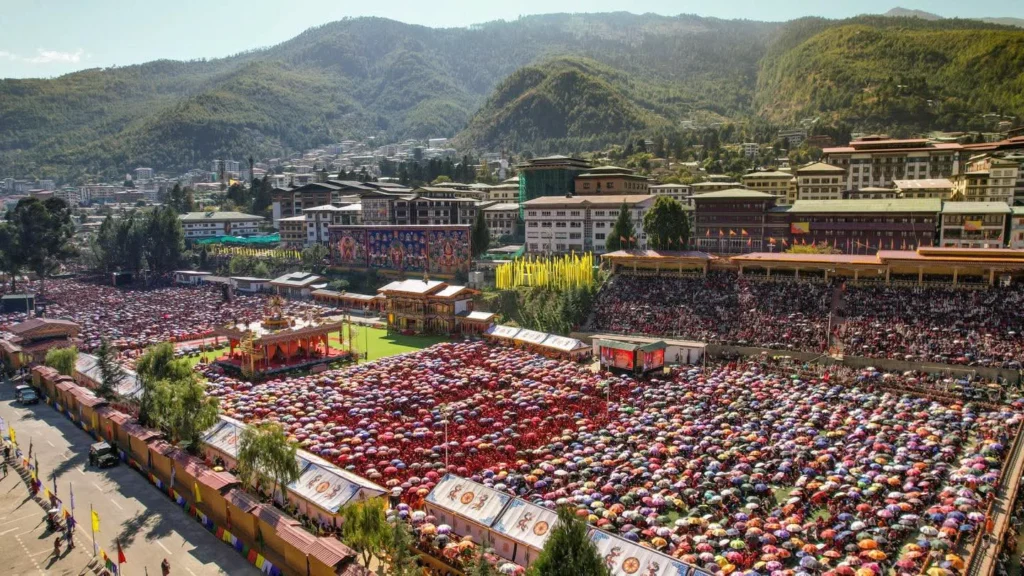
Prayer can be one of those causes. It works first on the person praying: aspiration and devotion steady the mind and strengthen determination, turning helplessness into action. But prayer reaches further, especially when practiced as a collective aspiration, becoming one of the conditions that shapes the future.
Prayer does not override cause and effect, nor can an unreasonable wish force reality to bend. The intention behind a prayer is itself a cause, and when rooted in the wish to benefit others, it generates merit — an enabling condition that can help the prayer bear fruit.
The sacrifice invested in prayer, together with the purity of its support — such as a Buddha image — further strengthens the conditions for its fruition. By contrast, a purely personal desire, such as wishing for more money or a new car, carries no such weight. Just as rain nourishes a seed but cannot produce fruit on its own, prayer can support an outcome but can only bring it about in combination with other causes and conditions.
Importantly, prayer is not the preserve of great masters; the prayers of ordinary people can also be effective when rooted in compassion and sincerity. A remarkable story from the 1999 Taiwan earthquake illustrates this. After her apartment building collapsed, trapping her two sons beneath the rubble, a mother prayed ceaselessly to Guanyin (Chenrezig). The boys, semi-conscious, later described a vision in which Guanyin showed them a hole behind the refrigerator, through which they eventually escaped.

What makes the story extraordinary is the mother’s unwavering devotion. She knelt on the street and prayed without sleep for 130 hours, continuing even after the rescue operation had been called off and neighbours urged her to accept that her sons were gone. Nearly six days after the collapse, the two boys emerged alive.
So, we tackle the immediate causes of disasters, press countries to cut carbon emissions, and pray — for the leaders of industrialised countries to find the wisdom to commit to net zero, and for all of us to live with greater awareness of our impact on the planet. We also offer heartfelt prayers for the people of Nepal.