

Mushrooms, Mountains and Monasteries: A Bhutan Mushroom Tour Through the Kingdom’s Forests
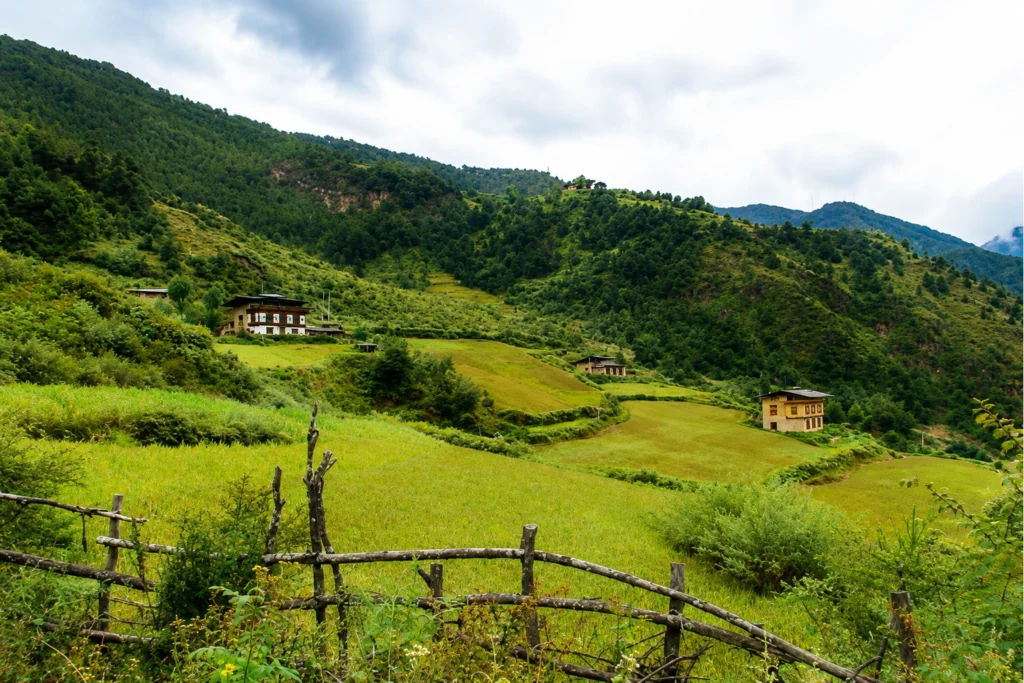
Bhutan is often introduced through its most recognisable landscapes, from the cliffside sanctuary of Tiger’s Nest and the great dzongs of its valleys to the sacred high mountain passes lined with prayer flags. Yet beyond these celebrated sights lies another dimension of the kingdom, one found beneath the canopy of its forests and revealed most vividly during the monsoon season.
More than 70% of Bhutan remains under forest cover, and the country’s dramatic changes in elevation create an extraordinary range of habitats. Broadleaf forests in the warmer valleys gradually give way to oak and conifer woodland, while spruce, fir, hemlock and pine dominate much of the higher landscape.
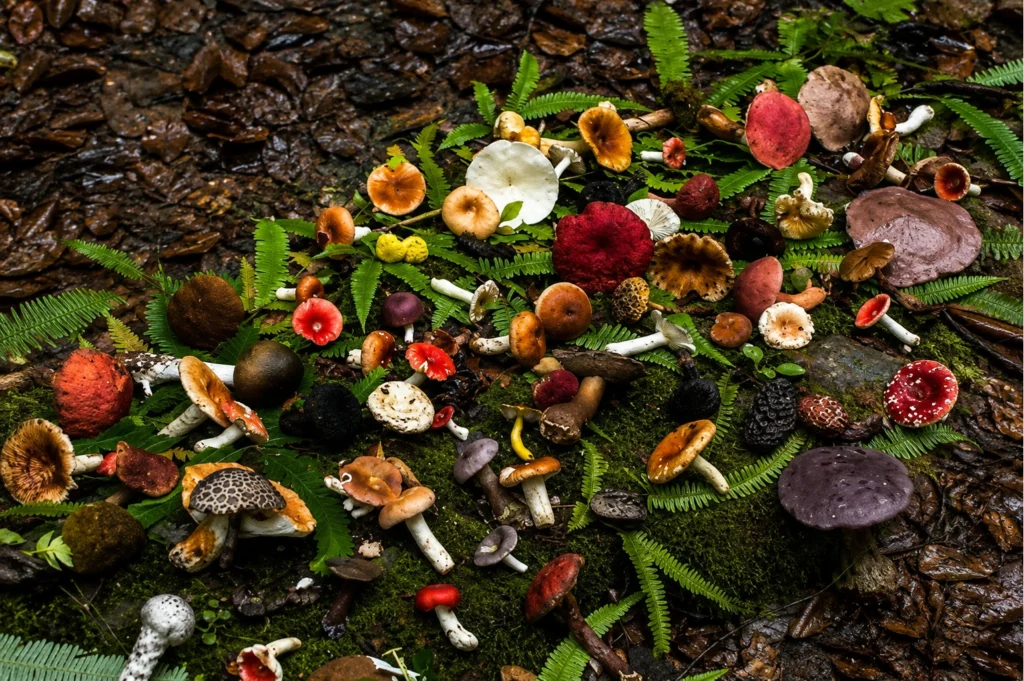
Each environment supports its own distinctive plant and fungal life, and the arrival of the rains transforms these forests. Mushrooms emerge among moss, leaf litter and grasses, while changes in altitude bring a corresponding change in the species that can be found. For travellers with an interest in mycology, this makes Bhutan an especially rewarding destination because a single journey can pass through several very different forest environments.
A Bhutan mushroom tour offers an opportunity to explore this diversity alongside Bhutanese landscapes, food and local knowledge. The experience is not simply about finding mushrooms. It is about understanding where they grow, recognising the relationship between fungi and their surrounding habitat, and learning how wild and cultivated mushrooms form part of local food traditions.
A Bhutan mushroom trip also offers a different way of experiencing the country. Visits to local markets and farms reveal the seasonal produce that reaches Bhutanese kitchens, while walks through heritage forests introduce the people and knowledge connected to them. Along the way, the journey passes through historic monasteries, traditional communities, mountain valleys and some of Bhutan’s most remarkable scenery.
The result is a journey that brings together nature, culture and cuisine, with the changing forests providing a thread that connects them all.
Discovering Bhutan Through Its Forests
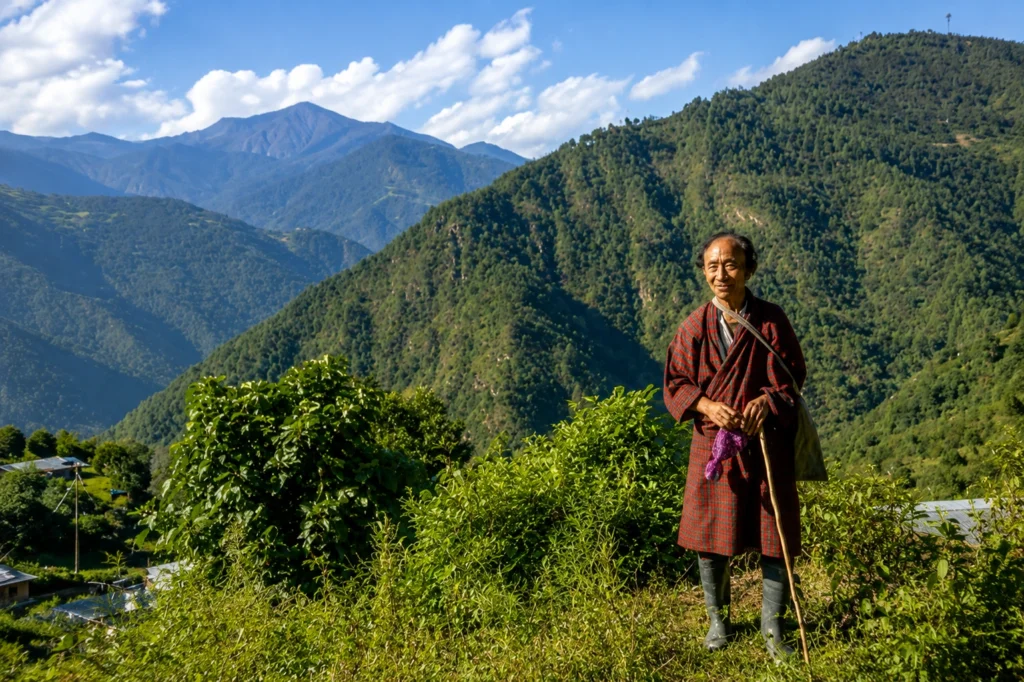
One of the defining characteristics of Bhutan is the dramatic change in landscape that occurs with altitude. Within a few hours on the road, travellers can move from warm valleys where bananas, citrus and ginger are cultivated to cool mountain environments covered in conifer forest.
For mushroom enthusiasts, this geographical variation is particularly significant. The forests around Tsirang provide a very different environment from the conifer forests of Phobjikha and Bumthang, and consequently the fungi encountered along the journey can vary considerably from one region to another.
Tsirang, situated at around 1,500 metres, forms the lower altitude of the journey. Its warmer climate and broadleaf forests support a range of fungi that differs from those found in Bhutan’s higher temperate forests. Further north, the landscape changes as the journey reaches Phobjikha and later the valleys of Bumthang, where spruce, fir, hemlock and pine forests become increasingly prominent.
This variety is one of the defining features of the journey. Rather than exploring a single habitat, travellers have the opportunity to observe how the forest changes with altitude and how those changes influence the fungal life within it.
From Forest to Table
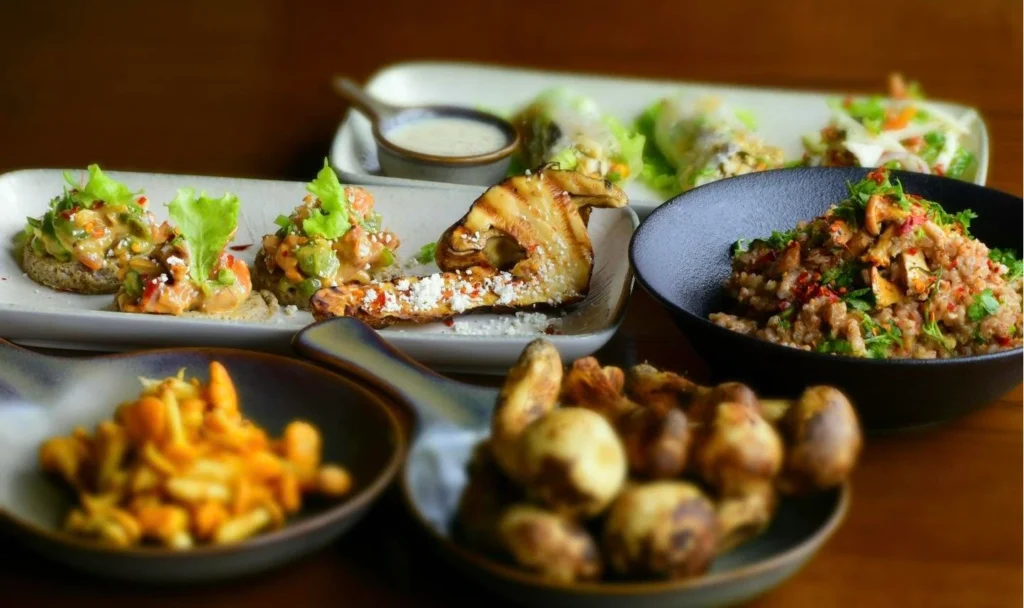
Mushrooms also offer an interesting introduction to Bhutanese food culture because foraging and agriculture are closely connected to the seasons.
The journey begins with a visit to the farmers’ market in Thimphu, where seasonal produce provides an early glimpse into what is being grown and gathered in Bhutan. In Tsirang, visits to local farms offer a closer look at agriculture in the warmer valleys, including oyster mushroom cultivation.
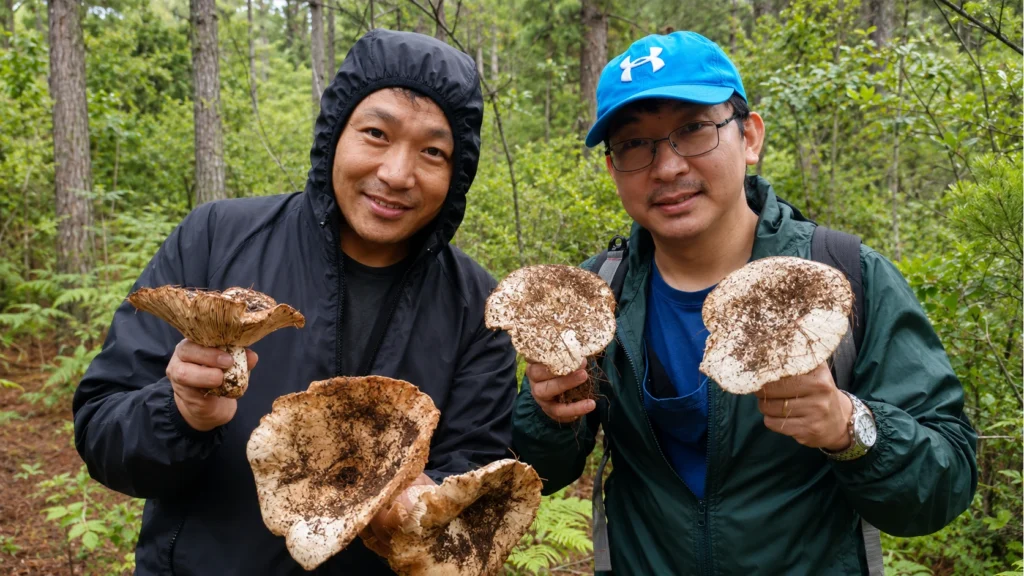
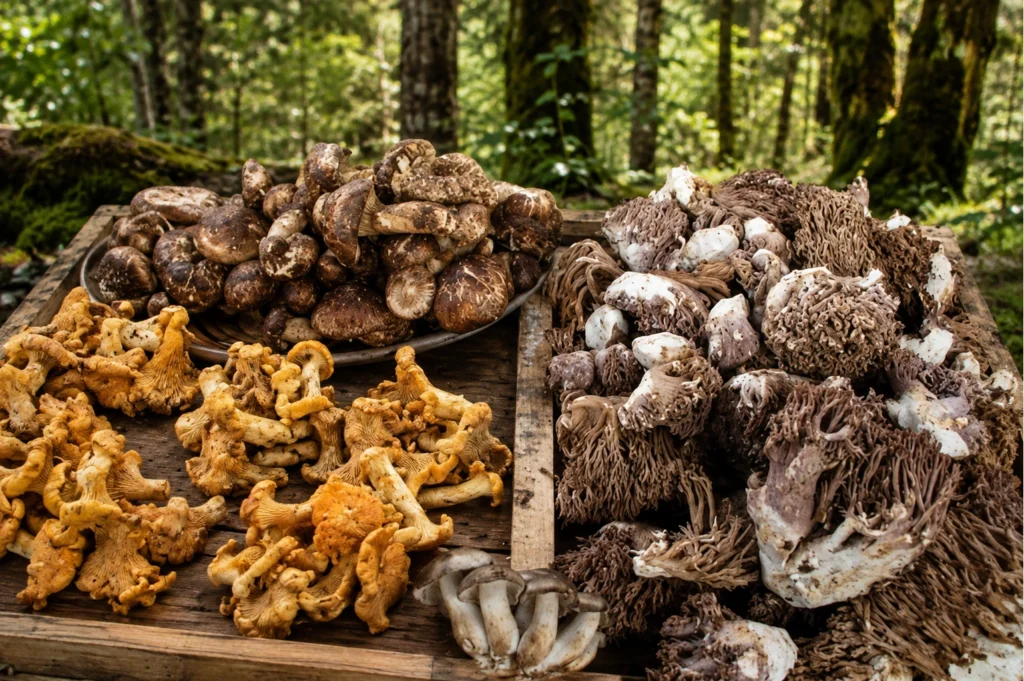
Wild mushrooms become increasingly important as the journey continues into the higher forests. In the meadows around Phobjikha, “Po Sha,” Agaricus campestris, is traditionally consumed either cooked or roasted. In the spruce forests around Jakar, the search turns towards species such as king boletes, matsutake and hedgehog mushrooms, together with other mushrooms associated with these forests.
The appeal lies not only in identifying the mushrooms themselves, but in seeing where they come from and understanding their place within local food traditions. A market, a farm, a forest walk and a meal can therefore become different parts of the same story.
The Bhutan Mushroom Tour
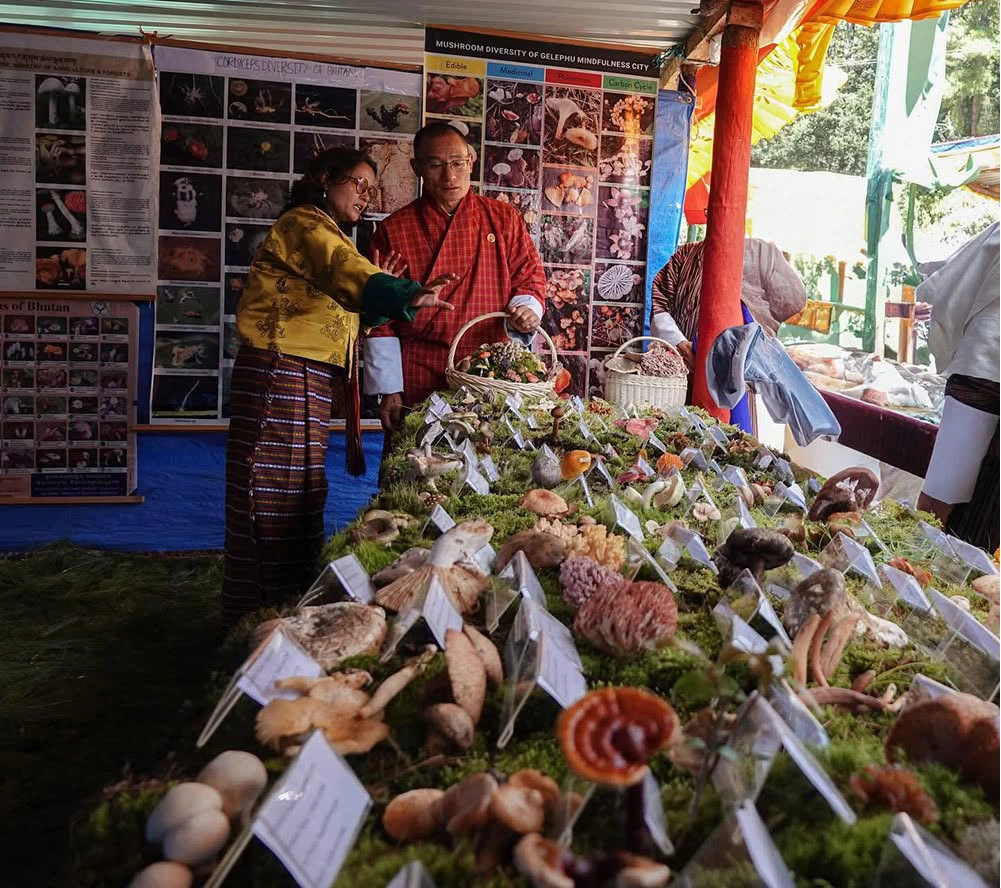
This itinerary has been designed to follow Bhutan’s changing landscapes while allowing time for both mushroom exploration and cultural discovery. The route moves from Paro and Thimphu into the warmer forests of Tsirang, continues towards the highland valley of Phobjikha and then travels east to Tang and Jakar in Bumthang before returning to Paro.
Along the way, there are opportunities for guided forest walks, local farm visits and seasonal mushroom observation, as well as visits to monasteries, heritage sites and traditional communities.
Day 1: Arrival in Paro and Journey to Thimphu
- Paro, 2,200 metres / 7,200 feet
- Thimphu, 2,335 metres / 7,660 feet
- Overnight at Druk Hotel, Thimphu
The journey begins with arrival in Paro before travelling by road to Thimphu, Bhutan’s capital. After checking into the Druk Hotel, there is an opportunity to visit the local farmers’ market, where seasonal produce provides a first introduction to Bhutan’s agricultural traditions and where mushrooms and other unusual produce may be found.
The afternoon is devoted to wildlife at the Takin Wildlife Park. Bhutan’s national animal is the takin, although the surrounding area is also home to Himalayan species such as serow, goral and barking deer, together with several colourful species of pheasant.
Day 2: Forest Walks and Monasteries in Thimphu
- Thimphu, 2,335 metres / 7,660 feet
- Overnight at Druk Hotel, Thimphu
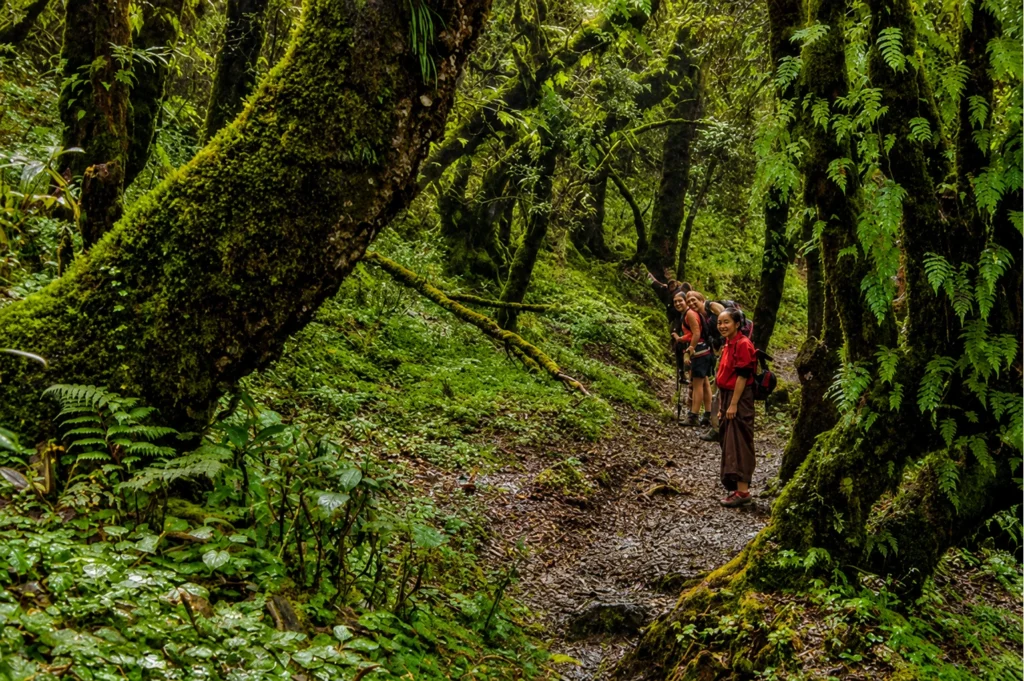
Today offers several ways to experience the forests and monasteries around Thimphu. Those looking for a longer hike can walk towards Phajoding Monastery, a journey of approximately five hours, while the trails towards Chagri or Tango provide gentler alternatives.
During the mushroom season, these walks also provide opportunities to observe wildflowers and fungi along the forest trails. The focus is not simply on what can be found, but on developing an appreciation for the relationship between the forest, altitude and seasonal growth.
The afternoon turns towards Bhutan’s traditional crafts with a visit to a Daphne fibre paper workshop and, where possible, a textile studio where weaving and indigo dyeing continue to be practised.
Day 3: Thimphu to Tsirang
- Tsirang, approximately 1,520 metres / 5,000 feet
- Overnight at Damphu Resort
The journey south to Tsirang takes around six hours and passes through several striking changes in landscape. The first major stop is Dochu La, known for its 108 stupas and surrounding hemlock forests, before the route continues past Wangdue Dzong and follows the Puna Tsang Chhu River valley towards Damphu.
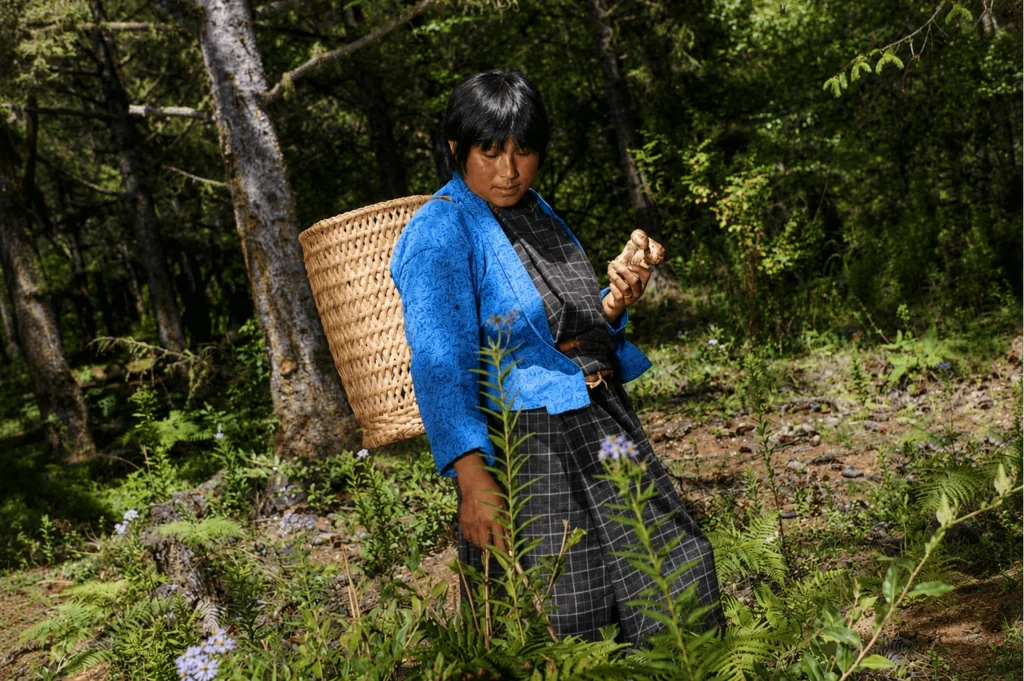
At approximately 1,500 metres, Tsirang represents the lowest altitude of the journey. Its warmer climate supports a rich agricultural landscape where rice, maize, ginger, bananas and citrus are cultivated throughout the year. The change in altitude also introduces a new forest environment, making Tsirang an important part of the mushroom journey.
Day 4: Exploring the Forests of Tsirang
- Tsirang
- Overnight at Damphu Resort
Tsirang is known for its thriving agricultural communities, with organic farms, agricultural cooperatives and oyster mushroom cultivation playing an important role in the region’s rural landscape.
Today we explore Pema Choeling Heritage Forest, an old-growth forest that provides an opportunity to observe fungi within a warmer broadleaf environment. The species found here can be quite different from those encountered later in the cooler conifer forests of central Bhutan.
We hope to be joined by Sabitra Pradhan, a fungal biodiversity specialist from the National Mushroom Centre who grew up in Tsirang. Her local knowledge adds valuable context to the forest walk, particularly when it comes to understanding the diversity of fungi and their habitats.
Day 5: A Second Day of Mushroom Exploration in Tsirang
- Tsirang
- Overnight at Damphu Resort
A second day in Tsirang allows more time to explore its distinctive forests and agricultural landscape. The mushroom walk follows the 360 Degree Track below the Royal Guesthouse in Kilkhorthang Gewog, passing through broadleaf forest where the fungal life can be particularly diverse under the right conditions.
The mushrooms encountered at this altitude are among the most distinctive of the journey and provide an interesting contrast to the species found in Bhutan’s temperate conifer forests.
In the afternoon, the journey continues to Khorsenay village for a visit to local farms. Here, the connection between agriculture, seasonal produce and rural life becomes more apparent, offering an insight into the landscape beyond the forest itself.
Day 6: Tsirang to Phobjikha
- Phobjikha, 2,900 metres / 9,510 feet
- Overnight at ABC Eco Lodge
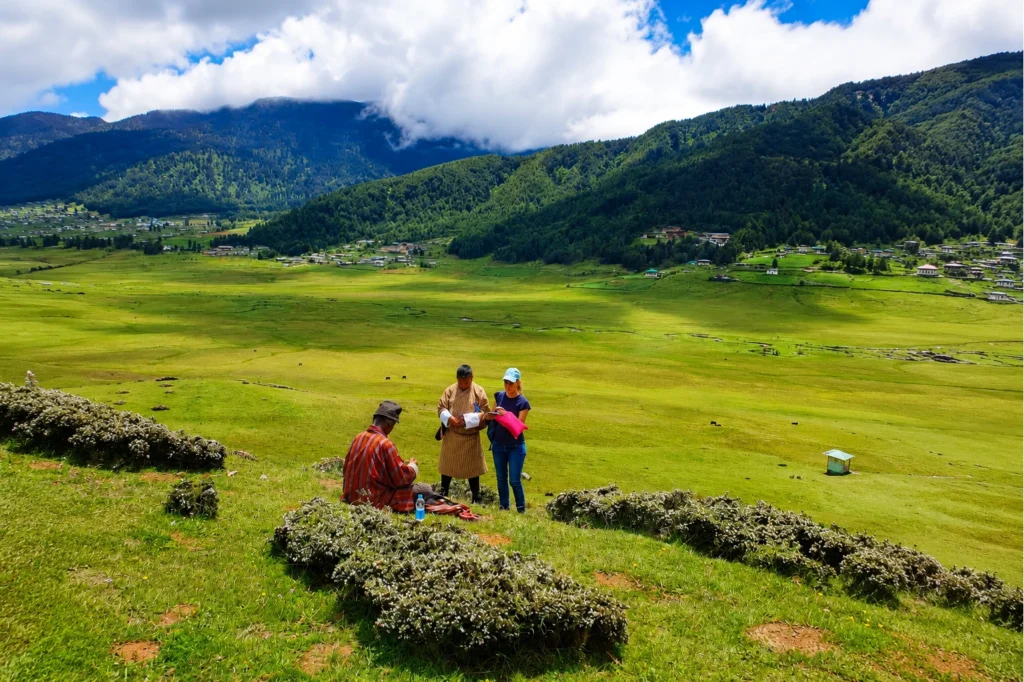
The journey continues north towards Phobjikha, a wide mountain valley surrounded by conifer-covered hills, wetlands and pasture.
Phobjikha is particularly well known as the wintering ground of the black-necked crane, Grus nigricollis, which arrives in Bhutan from the Tibetan Plateau during the colder months.
On arrival, we will visit Gangtey Gonpa, Bhutan’s largest Nyingma monastery and an important centre of the Pema Lingpa tradition. Founded in 1613, the monastery remains an important part of the spiritual and cultural life of the valley.
If the timing allows, the day concludes with the sound of evening prayers from the monastery.
Day 7: Mushroom Walks in Phobjikha
- Phobjikha, 2,900 metres / 9,510 feet
- Overnight at ABC Eco Lodge
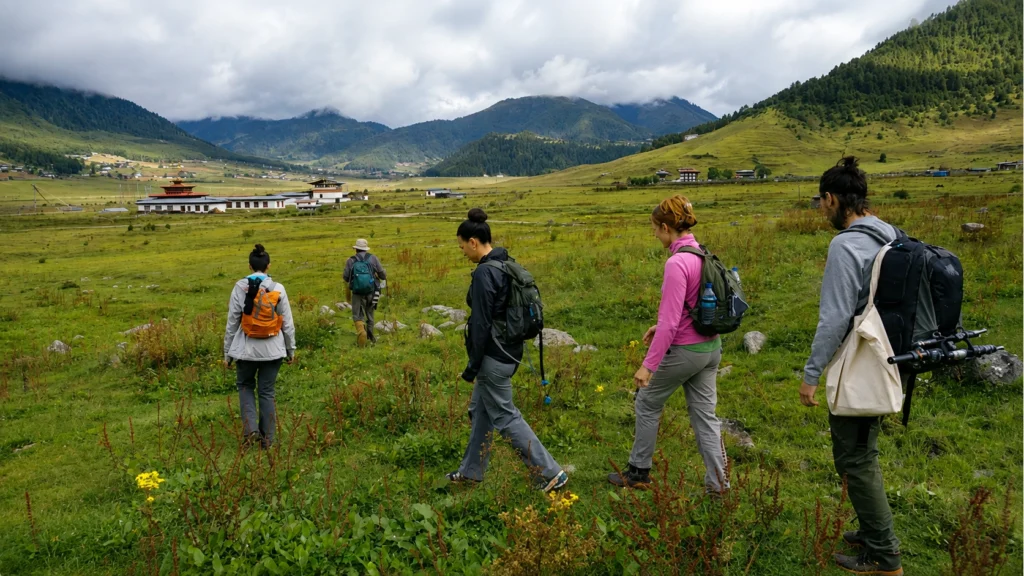
Phobjikha provides a different setting for mushroom exploration, with opportunities for both shorter walks and longer hikes through forests of hemlock, spruce, fir and pine.
The open meadows are also home to Po Sha, Agaricus campestris, a mushroom traditionally gathered and eaten locally, either cooked or roasted. The abundance and variety of wild mushrooms naturally depend on rainfall, temperature and seasonal conditions. Rather than following a fixed list of expected finds, the day is an opportunity to explore the forest and observe what the landscape is producing at the time of the visit.
Day 8: Phobjikha to Tang Valley
- Tang, approximately 2,800 metres / 9,200 feet
- Overnight at Ogyen Choling Guest House
An early departure takes us towards Trongsa via Pele La, which rises to approximately 3,420 metres. Along the way, the landscape continues to change as the road climbs and descends through Bhutan’s central mountain range.
We stop in Trongsa to see the impressive Trongsa Dzong and have time to enjoy the Waterfall Willing Café before continuing towards Tang.
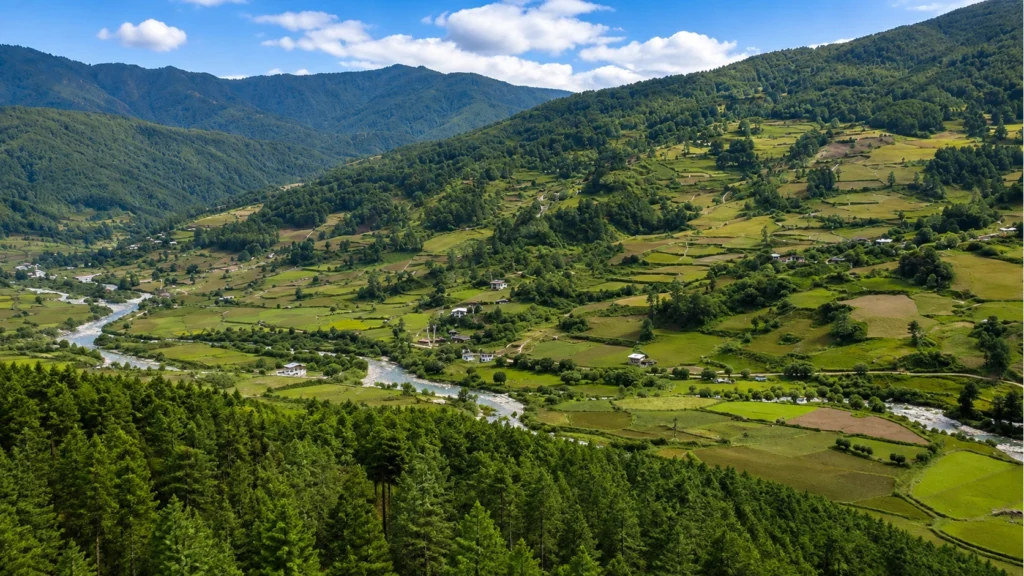
The afternoon route crosses Yotong La at approximately 3,425 metres before descending into Tang, one of the four valleys of Bumthang. The night is spent at Ogyen Choling Guest House, a historic hilltop manor overlooking the valley.
Day 9: Ogyen Choling and the Tang Valley
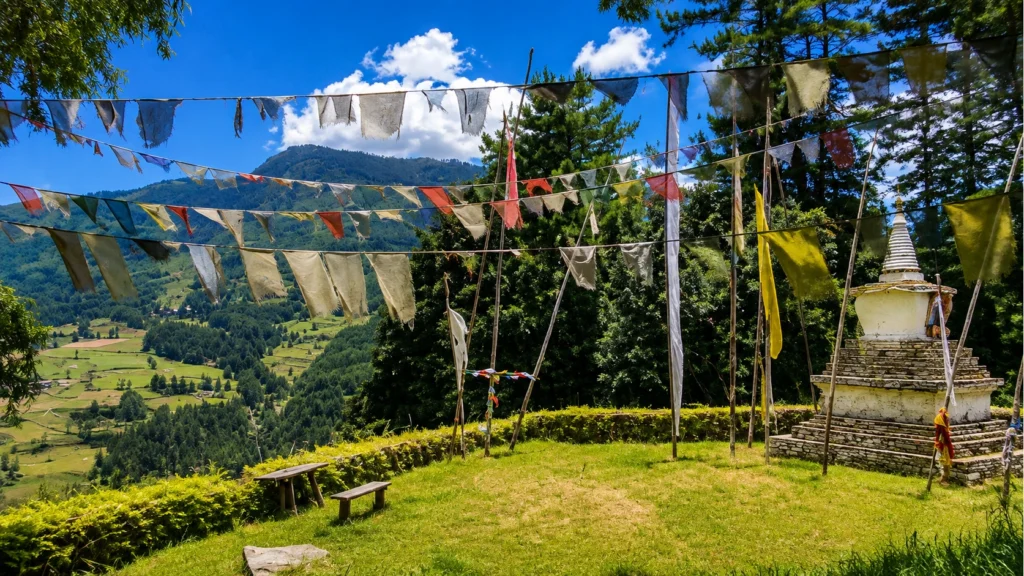
The morning is dedicated to Ogyen Choling, a historic manor with roots stretching back to the early medieval period. One of its notable visitors was Longchen Rabjam, who lived from 1308 to 1363 and played an important role in shaping the Nyingma Buddhist tradition.
The former manor has been preserved as a guest house and museum, offering a rare insight into the organisation of an aristocratic Bhutanese household and the agricultural, craft and trading activities that supported it.
In the afternoon, we take a walk through the surrounding forest. After the longer journey from Phobjikha, this provides an opportunity to experience the landscape at a slower pace while continuing to look for seasonal fungi.
Day 10: Forest Trails Around Tang
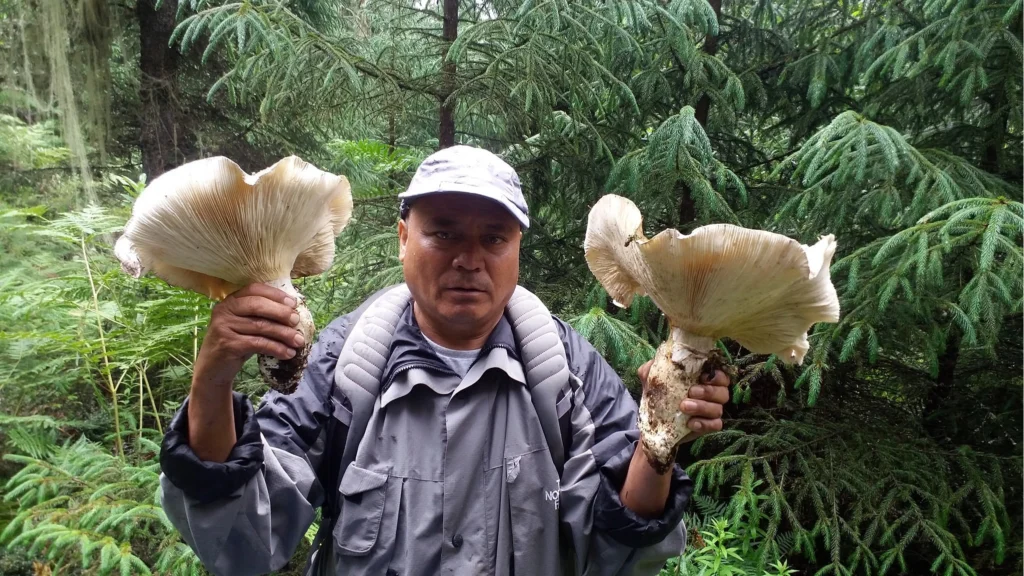
Today provides several options for exploring the Tang Valley on foot. The longer route towards Phokpey takes approximately seven hours, while the walk to Thowadrak takes around five hours. Travellers looking for a less demanding outing can instead visit Langmalung Lhakhang.
Each option provides an opportunity to spend more time in the surrounding forest and, during the appropriate season, to continue looking for mushrooms. There is also time to revisit the Ogyen Choling museum and explore the heritage of the manor at a more leisurely pace.
Day 11: Tang to Jakar Through the Spruce Forests
- Jakar, 2,587 metres / 8,488 feet
- Overnight at Rinchenling Lodge
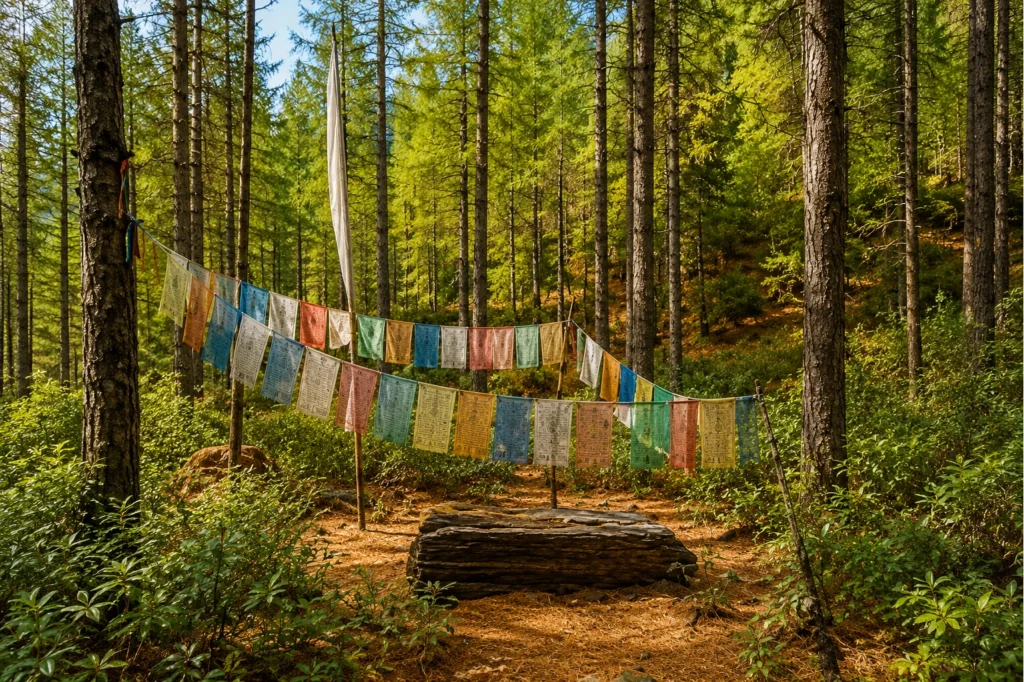
The journey continues towards Jakar via Tangsibi, where spruce forests provide another important habitat for mushroom exploration.
Depending on seasonal conditions, the forests may yield king boletes, matsutake, hedgehog mushrooms, Fried Chicken mushroom and other species associated with spruce woodland. The change from Tsirang’s broadleaf forests to the cooler spruce forests of Bumthang provides one of the clearest examples of how Bhutan’s fungal diversity follows its changing elevation and vegetation.
Later in the day, we visit Jampa Lhakhang, traditionally regarded as one of the first temples constructed in Bhutan by the Tibetan king Songtsen Gampo in the seventh century. For those interested in Bhutan’s traditional wellness practices, a hot stone bath can also be arranged at the lodge.
Day 12: Jakar to Paro and Forest Lunch
- Jakar to Paro
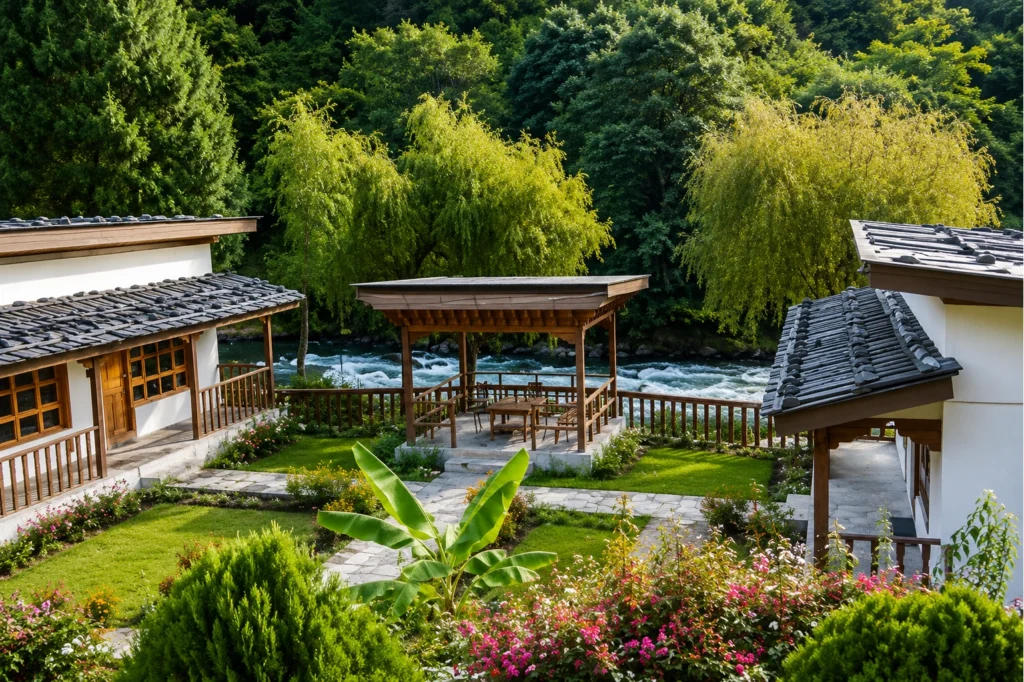
- Overnight at Tiger’s Nest Camp
Weather permitting, the return journey to Paro is by air, taking approximately 30 minutes. Mountain weather can affect flights, however, and an alternative road journey of around eight hours may be required if the flight is cancelled.
On arrival in Paro, the afternoon is spent in the forests below Chele La, approximately one hour from the valley. The area provides another opportunity for a forest walk and seasonal mushroom exploration before the journey begins to wind towards its conclusion.
Lunch is served in the forest, allowing the meal to become part of the landscape rather than simply a pause between activities.
Day 13: The Journey to Tiger’s Nest
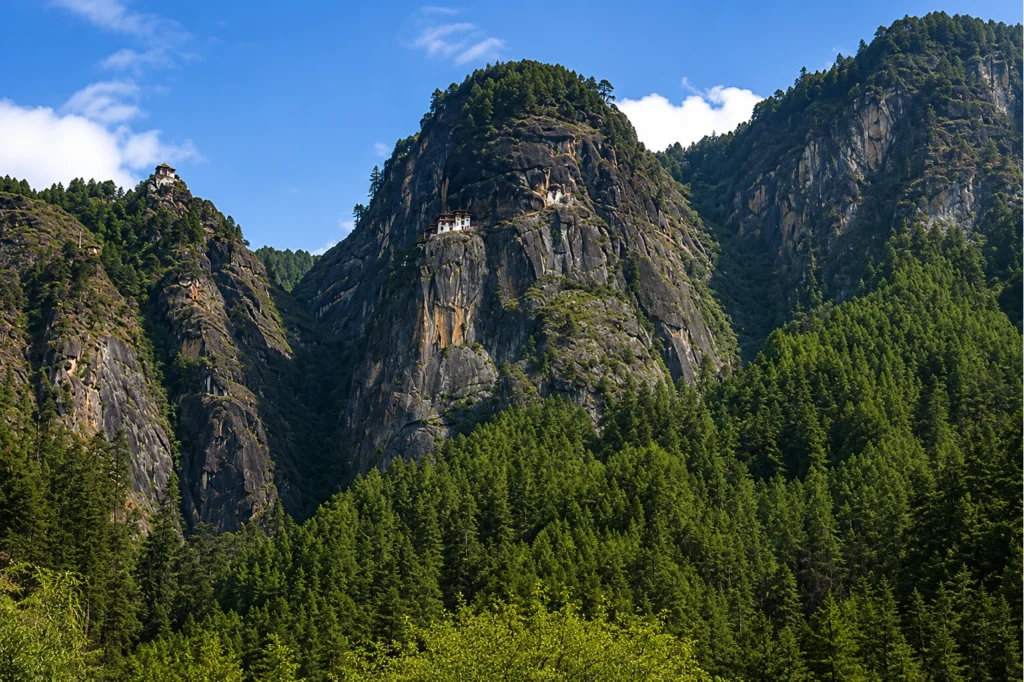
- Paro, 2,195 metres / 7,200 feet
- Taktsang, approximately 3,200 metres / 10,500 feet
- Overnight at Tiger’s Nest Camp
The final full day brings one of Bhutan’s most celebrated landmarks.
The hike to Taktsang begins at approximately 2,650 metres and follows a mountain trail towards the monastery, which appears to emerge from the sheer granite cliffs above the Paro Valley. The present monastery dates to the seventeenth century, while the site’s spiritual history reaches back to the eighth century, when Padmasambhava, known in Bhutan as Guru Rinpoche, is believed to have meditated here with his spiritual consort Yeshe Tshogyal.
The climb is steady and rewarding, with opportunities to rest along the way and take in the changing views of the valley and surrounding forest. After a journey centred on Bhutan’s natural landscapes, it is a fitting place to conclude the exploration.
Day 14: Departure from Paro
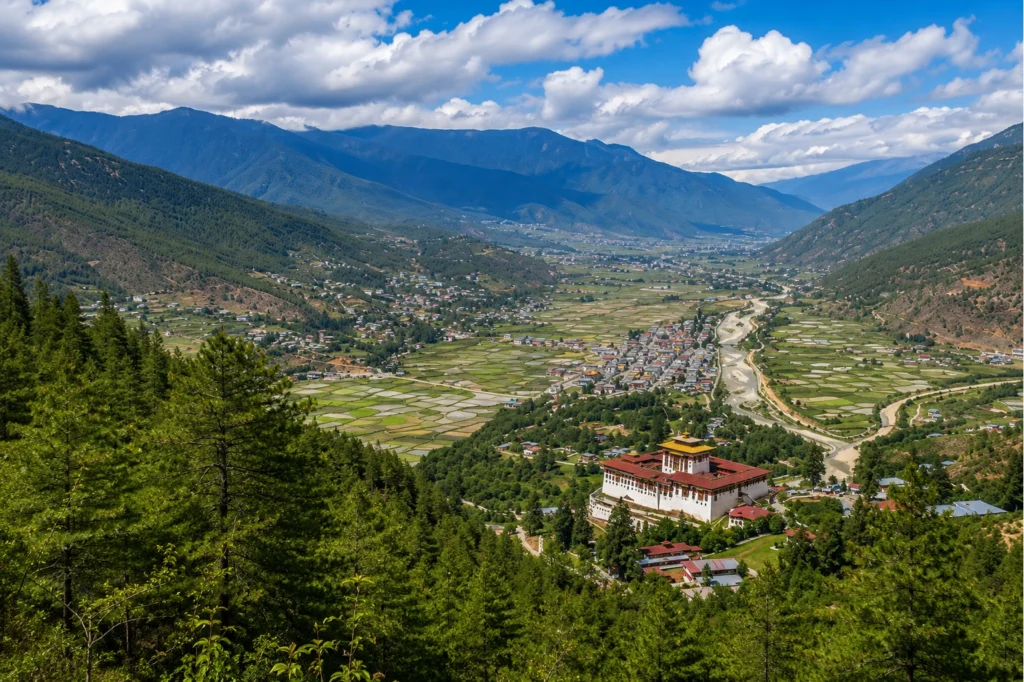
- Paro
The final morning is reserved for packing and a relaxed transfer to Paro Airport. If time allows, there is an opportunity to enjoy one of Paro’s cafés or restaurants and browse the town’s shops for Bhutanese textiles, artwork and other locally made souvenirs.
The journey ends here, but the experience of Bhutan’s forests extends well beyond the mushrooms discovered along the way. From the warmer landscapes of Tsirang to the conifer forests of Bumthang, the route has revealed a country where ecology, agriculture, cuisine and culture remain closely connected.
A Different Way to Experience Bhutan Mushroom Tour
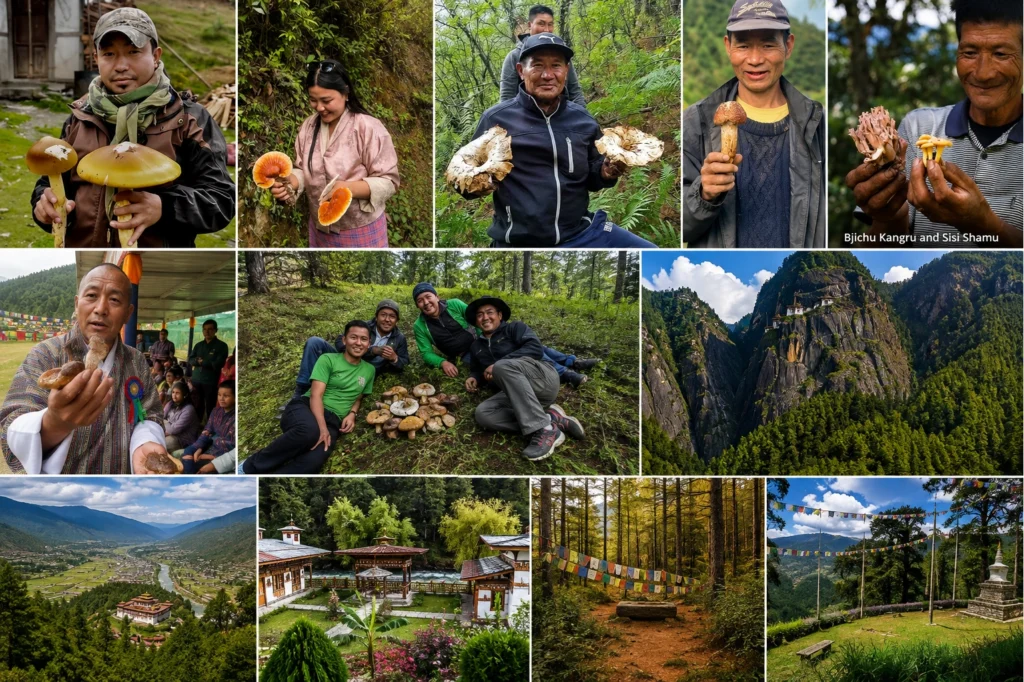
A mushroom journey through Bhutan offers a perspective that is rarely found on a conventional itinerary. The familiar landmarks remain part of the experience, but the forests reveal another side of the country through seasonal change, local knowledge and the food that grows from the landscape.
Most importantly, it encourages a slower way of travelling, giving you time to stop, observe and appreciate the connection between Bhutan’s landscapes, culture and cuisine.
If you would like to experience Bhutan in a way that reflects your own interests, Druk Heritage can help shape a journey around what you want to discover, from its forests and fungi to its food, culture and people.
- Private guided tour
- Visas for Bhutan
- Airport transfers
- Daily 3 meals (B/L/D) at designated restaurants or hotels
- Accommodation at 3 star Bhutanese boutique hotels and resorts
- A qualified & licensed English-speaking guide
- An experienced driver
- A tour vehicle
- Entry fees & road permits
- Government Sustainable development fees
- Daily refreshments
- Set of traditional costume
- Full service & assistance before, during and after your Bhutan trip
- Flight into Bhutan via Drukair (can be arranged with us)
- Flight on other airline to catch Drukair Flight
- Meals at 5 stars restaurants
- Hotel stay outside of Bhutan
- Expenditure of personal nature
- Travel Insurance
- Gratuity for the guide and driver
- Alcoholic drink
- July and August.
For pricing details, please contact our team. We are committed to providing you with the best all inclusive offers for your travel.
Our Guarantee
Visa acceptance is guaranteed. In terms of Visa issuing, we have yet to disappoint any of our travelers. Prior to your arrival, your hotel selection will be confirmed for inspection. We only book you into hotels that you enjoy and would return to.
If you are not satisfied with our choices, we will gladly alter your guide, driver, or vehicle during the first two days of your arrival in Thimphu. Our hospitality team is there to assist you 24×7.